Chapter 04 · PLXN World · Sep 2024 – Apr 2026
CLUE AI
A syllabus-aware AI tutor for IB students, grounded in their textbooks and their own past lessons.
 Placeholder — swap for a real screenshot
The problem
A chatbot answers from the internet. An IB student needs the answer from their syllabus.
- i.Generic answers use methods the syllabus doesn't teach, and notation the exam won't accept.
- ii.The best context lives in hours-long 1-on-1 sessions that nobody re-watches.
- iii.Maths has to be step by step, in proper notation, and right.
Ask it something. Watch it cite.
A simulated, in-browser version of the tutor. Answers are scripted for three sample questions; the routing, citations, self-check and memory are animated to show how the real agent works.
Tutor
Hi! I've read your textbook and last week's session. Ask me anything from Chapter 5 or 6.
Sources the tutor cites
parsed by Docling · layout-aware sample pages
Chapter 5 · Differential calculus
5.3 The chain rule. If y = f(u) and u = g(x), then dy/dx = dy/du · du/dx. Differentiate the outer function, then multiply by the derivative of the inner one.
Worked example 5.3a. For y = sin(x²), let u = x². Then dy/du = cos u and du/dx = 2x, so dy/dx = 2x cos(x²).
Common error. Students often stop after differentiating the outer function. Always ask: what is inside, and what is its derivative?
Chapter 6 · Circular motion & gravitation
6.1 Centripetal force. An object moving in a circle at constant speed accelerates towards the centre. The net force needed is F = mv²/r, directed inward.
6.2 Newton's law of gravitation. Every mass attracts every other mass with F = GMm/r². For a satellite, gravity is the only force acting.
6.2b Orbits. In a circular orbit, gravity supplies exactly the centripetal force. The satellite is in free fall, but its sideways speed carries it around the Earth.
Whisper v3 Turbo · sample transcript 1-on-1 session
Tutor: Today it's the chain rule. Outer function first, then the inner one.
Student: So the derivative of sin(5x) is cos(5x)? Tutor: Close — you dropped the 5 again. Multiply by the inner derivative.
Tutor: It clicked when we did a worked example first. Let's start there next time.
Tutor: Homework: three composite functions, show every step.
Three tiers of memory — updates as you chat
Tier 1Token-aware window
Recent turns, kept word for word until the budget fills.
Tier 2Progressive summary
Session started. Student is revising calculus and mechanics.
Older turns are folded in here instead of being dropped.
Tier 3Cross-session pedagogical memory
- Drops the inner derivative in chain-rule questions
- Learns best from a worked example first
How it works
From a 200 MB recording to a cited answer.
- 1
Two kinds of homework go in.
Textbook PDFs go through Docling for layout-aware parsing. Hours-long 1-on-1 session recordings, up to 200 MB, go through Whisper v3 Turbo.
- 2
Workers do the heavy lifting.
Redis and Celery workers chunk and embed everything in the background. Files live in MinIO; vectors live in pgvector.
- 3
An agent that remembers.
A LangChain ReAct agent searches the student's own material, with a token-aware window, a progressive summary and cross-session pedagogical memory.
- 4
The right model for the job.
A router picks between Gemini, Claude and GPT-4.1. Step-by-step LaTeX maths goes to GPT-4.1.
- 5
Check before you speak.
Self-correction loops test each claim against textbook citations before the answer streams out.
By the numbers
- ≤10 msvector search
- <120 msto first token
- 200 MBsession recordings, transcribed
- 3memory tiers · 3 model families
Gallery
The study desk. Move things around.
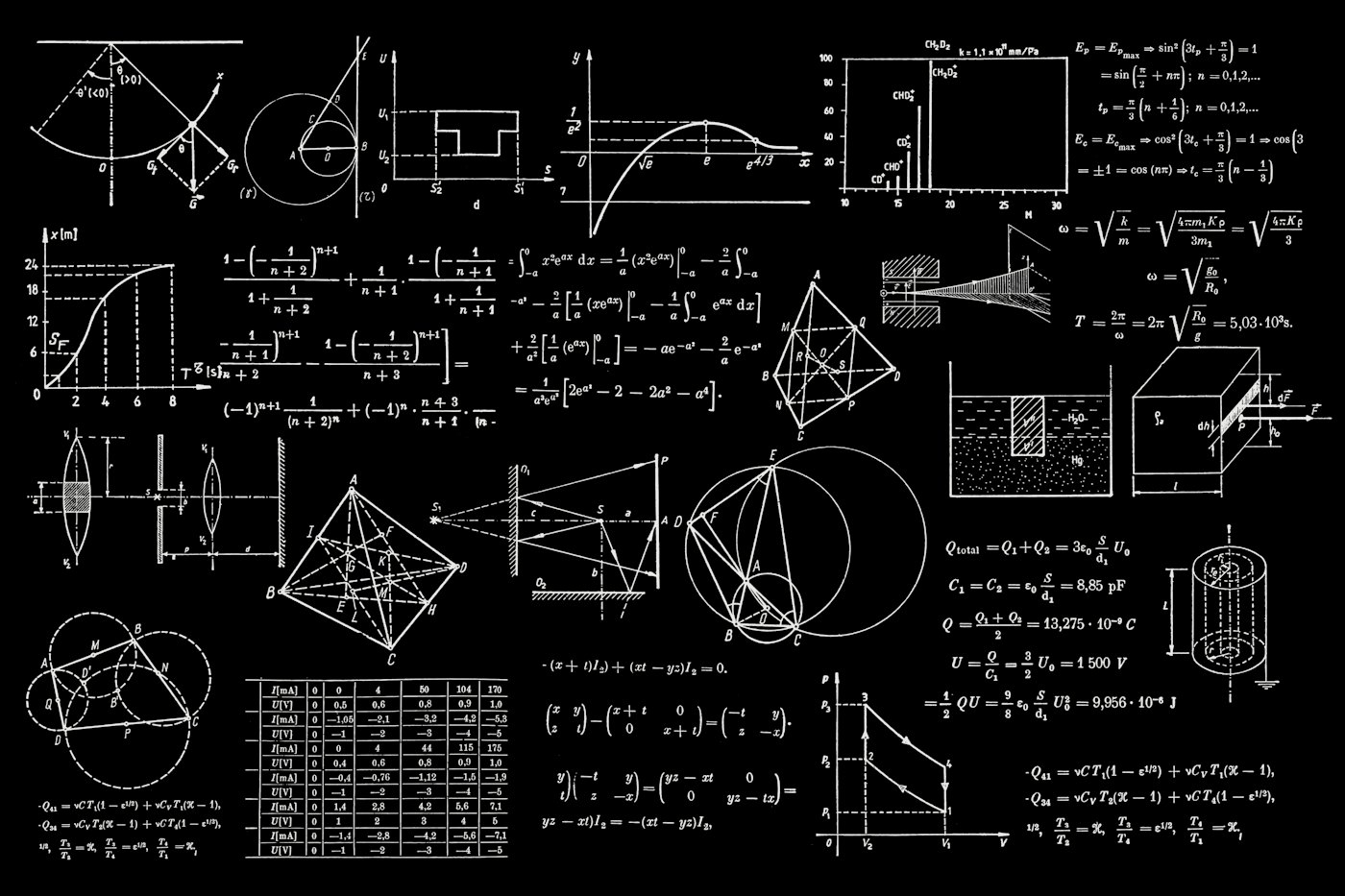
Drag the photos. Placeholders for real screenshots.



Reel
Ten seconds of study time.
Placeholder montage. The real one will be a screen recording of a tutoring session.
Stack
On the reading list.
- Next.js 16
- FastAPI
- Redis
- Celery
- MinIO
- pgvector
- Docling
- Whisper v3 Turbo
- LangChain
- Gemini
- Claude
- GPT-4.1
Built at PLXN World. The code is private; I can walk you through the architecture.